

I wish I could tell you that when I went to the doctor about it she took me seriously. That she didn’t send me on my way to look for powdered Gatorade. That she could see what even my seventh grade science teacher could see when she sent me home after telling me I looked “white as a ghost” after almost passing out from the pain. That the doctor then gave me a diagnosis, medication, and maybe even sympathy. More than anything, I wish I could say that I’m the only person who this has happened to. Unfortunately my story is not unlike so many others living with endometriosis (endo).
What is endo?
To learn more about this unique and neglected disease, I spoke to Dr. Paul Yong (MD, PhD, FRCSC) a gynecologist working at BC Women’s Hospital + Health Centre (BC Women’s) specifically in the centre for Pelvic Pain & Endometriosis, who gave a brief description of the condition.
“We say there’s endometrial-like cells growing outside of the uterus. Its two main manifestations are pelvic pain and infertility. Pelvic pain includes probably the most common symptom — painful periods known as dysmenorrhea. It also causes sexual pain, deep dysuria, pain with bowel movements, and [it] can evolve into chronic pelvic pain.”
The term “endometrial-like cells” stems from the endometrium which is the lining of the uterus that gets shed during a period. At one point it was believed, and some resources still believe, that these cells are endometrium, but the thinking on this has since changed. There is a separate disease called adenomyosis which is the endometrial tissue itself growing outside the uterus.
Endo is most felt and directly deals with the uterus and period pain, meaning most people like to dismiss it as being a “period-only disease” or “just a very bad period.” However, Dr. Yong dispels that logic.
“Endometriosis is associated with systemic symptoms beyond the pelvic region. So beyond pelvic pain, beyond infertility, it’s associated with things like fatigue, pain in other parts of the body …
“A minority of the cases show that the endometriosis is growing outside of the abdomen and pelvis … [like] the diaphragm and the thoracic cavity … [and] the brain, [which] is extremely rare …”
When I read that they had found endometrial-like cells on the brain, it felt like a Stephen King novel, but this is someone’s reality.
Dr. Yong also talked about how endometriosis affects systems in the patients bodies. For example, endometriosis is known for increased inflammation not just surrounding the endometrial-like cells but across the body. He also commented that there seems to be changes to the central nervous system and or the adrenal glands. The presence of endo affects the entire body.
Symptoms of endo
Talking with the Executive Director of The Endometriosis Network Canada (TENC), Katie Luciani, she outlined the characteristics that make up endometriosis.
“Extreme period pain, pain with sex, painful bowel movements, [and] bladder pain. There’s a lot of comorbidities that come along with that, like pelvic floor dysfunction, [and] interstitial cystitis — painful bladder syndrome.”
Infertility is also another common symptom of endometriosis. In fact, it sometimes is the only reason women find out that they have been living with the disease since not everyone with endometriosis experiences every symptom. According to TENC, roughly one in three people with endometriosis experience fertility issues and approximately one in 26 people with endometriosis will face recurrent pregnancy loss, which is defined as experiencing two or more miscarriages in a row.
When asked about the effect on a person’s chance of conceiving, Dr. Yong agreed with TENC’s statistics.
“Not everybody with endometriosis has infertility. Only a proportion, but there’s also some data now [suggesting] that if someone does get pregnant, there might be a higher risk of certain complications during pregnancy as well.”
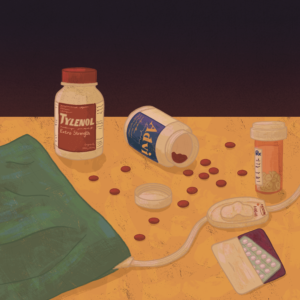
In my experience, endo shows up as overwhelming and debilitating pain. The first two days of my period are agony — think a searing hot knife slashing your abdomen. I often have to take two extra strength ibuprofen or Tylenol every couple of hours (sorry kidneys and liver) to get through the day. I usually get nauseous, and the pain is so bad that I can start to get light-headed. The pain isn’t only contained to the time when I’m on my period either, but it is less intense — more like a dull ache from a bruise — and is more sporadic.
Endometriosis is unique to each person. Even with advancements in imaging technology to see the endometrial-like tissue, it can be hiding or go undetected.
Diagnosing endo
The current average time frame to get a diagnosis is five years, which is a long time for a disease that starts to present itself during puberty. When asked about the diagnosis process, Dr. Yong explained some of the methods commonly used.
“Historically the diagnosis required surgery, specifically laparoscopic surgery … The first [nonsurgical] way is what’s called a clinical diagnosis — where you [are] clinically suspected based on a history of examination … In the last 10 years or so, there’s [also] been a lot of advances in imaging diagnosis of endometriosis. So both [an] ultrasound and [an] MRI. Not all endometriosis can be diagnosed with it, but certain types can.”
The problem is the many barriers that people can encounter along the way. Luciani outlined the usual steps and the road blocks to getting a diagnosis.
“One of the first barriers that people come across is when they get their period, these symptoms start showing up, they go to their healthcare provider, and that person is the first barrier. If that person doesn’t know anything about endometriosis or has that kind of old school way of thinking about it. Like, ‘just get pregnant and everything will be fine.’ Or ‘just take some Advil and everything will be fine.’ That’s your first barrier right there. That person is like the gatekeeper in essence, because if they don’t know about endo or are not up to date with all of the science-based evidence information, then you’re fighting with yourself at that point.”
Luciani shared that the constant dismissal and invalidation are normal mentalities people within the endo community tend to come up against. They have to take it upon themselves to research and advocate for themselves. For myself, I ran into several barriers like that. In true Gen Z fashion, TikTok was the first place where I learned about endo. This was, of course, after several years of telling my doctor something was wrong.
Even after getting one doctor to take you seriously, Luciani explained that you need more people to listen and understand your pain before getting a diagnosis.
“Let’s say you get a referral to an OBGYN and that doctor isn’t up to date on all of the endometriosis information. They’re not MIGS trained — minimally invasive gynecologic surgery … Then that’s another barrier scare because that person is either going to advocate for you or not going to advocate for you … I think a big piece of that is as the person living with the disease, you want to be able to be a part of that conversation and make those choices based off of the knowledge that you’re given and not being told this is your only option. You want somebody that works with you and everybody’s life goals, everybody’s challenges, they’re all so individualized and so personal.”
The ideal would be to have a primary care doctor who, even if they don’t know a lot about endo, are willing to research, to listen, and to take their patients seriously. Then send them to a well trained OBGYN who, if they aren’t MIGS trained, would refer the patient to a surgeon who is. On top of those barriers some patients face systemic racism, or are two-spirited or gender diverse, further preventing them from getting the care they need.
I got my diagnosis in such a blasé way that even now I don’t know if it’s a real diagnosis. My OBGYN just said to me “yup, you probably have it.” All those years of pain for that? He gave me options for treating it including birth control, an Intrauterine Device (IUD), or a full hysterectomy. His suggestion for managing my pain in the meantime: take an ibuprofen before my period starts.
Genius, why hadn’t I thought of that?
Managing the pain
Treatment plans can get tricky when it comes to managing the pain and symptoms of endo because each patient coming in for treatment has different goals and needs. According to Dr. Yong, there are two types of pain classifications that can present in patients with endo: nociceptive and nociplastic, which is why BC Women’s takes a holistic approach to treatment.
“Nociceptive is due to events directly related to the endometriosis lesions. So things like inflammation that the lesions produce. They can be locally invasive. They can grow near organs or even into organs like the bowel. They can release factors that sensitize the nerve endings and the periphery. That’s nociceptive pain.
“Nociplastic pain is [when] it seems like there’s these changes in the central nervous system that can mediate some of the systemic effects of endometriosis.”
Dr. Yong further outlines how the two pain classifications need different methods of management as well as how BC Women’s approach treatment of a patient who might be experiencing both.
“We try to understand … to what degree this person’s pain [is] nociceptive or nociplastic, or a combination of the both or what proportion. That guides the treatment because nociceptive pain is treated with hormone based … therapies that suppress estrogen, because the disease does seem to be estrogen dependent.
“If somebody also has a nociplastic part of the pain, that’s usually where pain is related to other body structures. So it’s related to muscle, to the bowel, related to the bladder. And then we use medications targeted to [those areas]. We do physiotherapy to focus on the pelvic floor musculature, the back, [and] the abdominal wall muscles.”
Surgery has been a hot topic in the endo community for some time now. Some people like my primary physician say that surgery is no longer being used because it tends to make things worse for the patient, but it was once believed that surgery was the only way of diagnosing. Dr. Yong confirmed that it’s not always the way to go but that doesn’t mean it’s completely off the table.
“Surgery is an interesting point. So what we’re trying to do is kind of both sides of the coin … We don’t want to overuse surgery, but there’s also an issue of patients not having access to surgery when they need it. So, you want to address both, and one way you do that is by trying to select the right individuals for surgical management or non-surgical management.”
BC Women’s doesn’t just treat physical symptoms — they also recognize there’s a large emotional and mental toll that patients take on.
“We do counselling. I’m not saying the pain is in someone’s mind, but pain is ultimately a biological, psychological, social phenomenon. So we try to address pain in a holistic way, and then educate about pain. I think patients find it quite useful.”
Another way of addressing the mental toll could mean going to support groups. TENC holds monthly virtual groups facilitated by a designated support worker. Luciani stressed how helpful support groups were for her and how it inspired her to create TENC.
“Being able to find a community that understands and just gets you, and you don’t have to tell them anything, they just know, and they know how to support you and lift you up and empower you — that’s life changing. Like really it is. I experienced that. That’s what made me want to give back to the endometriosis community: finding this support group years ago and going into it [with] no hope, [and in a] very dark place, and leaving that support group going, ‘wow, there’s a light at the end of the tunnel. I’m not crazy. It’s not in my head.’ Finding that connection with people is truly so special and it really can have such a positive impact on your mental health because at the end of the day, although this is pain, it also has a huge impact on your mental health in so many ways.”
Although I hadn’t spoken to anyone with endo until interviewing for this article, I felt this sentiment of community through a good friend who lives with polycystic ovarian syndrome (PCOS). She was the first person who I felt understood what I was going through and gave me the confidence to speak about it openly.
New and exciting things in the world of endo
The biggest problem with endo is a lack of funding. A complicated disease requires more research than it’s been given. Luciani spoke about how the disease is always evolving, making it difficult for researchers to keep up.
“There are a lot of great Canadian doctors across the country, but there’s always a need for more, and there’s always a need for more funding from the government to be able to have more research. I think at the end of the day, [endometriosis] is still evolving so much. Every year we’re finding out more and more about the disease. We still don’t know why it happens, but there’s still so much changing. The more that that funding comes from the decision makers, the policy makers, there’s more attention brought to this disease.”
Funding is still going to misguided research projects like “A qualitative study of the impact of endometriosis on male partners.” Not to invalidate what male partners go through, but I do think that should come secondary to researching the actual disease itself.
Thankfully, not all the funding is going to research projects about male partners. Dr. Yong spoke about some of the newest exciting research projects that will change the way we see endometriosis.
“The holy grail of diagnosis is a non-invasive blood test. And that’s a very active area of research right now. There’s a European test that actually just came out [which] has a lot of promise for a blood test diagnosis.”
Yong said we are still about five years away from blood test diagnoses becoming more standardized. BC Women’s is also working on something that will help determine when surgery is necessary or helpful.
“[It’s] a calculator that clinicians and patients can use. It’s not perfect, but it is the first of its kind that says [if] there’s a good chance pain’s going to get better after, or [if] there’s not a good chance because we don’t want to overuse surgery.”
BC Women’s is also actively involved in working on a non-hormonal drug for managing endometriosis pain and symptoms.
“The ideal is to provide another option of a non-hormonal drug that will offer efficacy when the hormonal treatments don’t work, have not the same side effect profile, and potentially can be used when someone’s trying to get pregnant. So that’s actively undergoing. I’d probably say more like five to 10 years away.”
Living with chronic pain
I’ve never really taken a moment to think about what living with chronic pain is like because even though I’d done the research, felt the pain, I didn’t think it was enough. Like without this whole parade of surgeries and diagnoses, I didn’t have a right to claim that what I was experiencing was wrong. Shitty, right? I was feeding into a system of shame and stigma by keeping quiet. When it comes to my pain, I adopted a shut up and get through it mentality. Life doesn’t pause for my pain, it keeps going and I felt like I had to keep going — otherwise I would never catch up.
Only I haven’t been keeping up. Being in so much pain means that I don’t put my everything into what I’m doing. Sitting in class only half of my attention is on lectures. Hanging out with friends I get irritated and don’t feel like myself. Sometimes I have to disassociate just to get through the day. By writing this and researching more, I’ve begun to allow myself to process.
I’ve felt hopeless a lot, but by talking to Dr. Yong and Katie Luciani, I’ve really felt seen — I’m not all alone in this journey. One thing both of them stressed to me was the importance of raising awareness and I can’t help but agree. Without other people’s willingness to share their stories online I’d never have found out about endometriosis. So this is my way of raising awareness. If you’ve read this all the way to the end and you think, “man I might have this” then I really encourage you to do more research and reach out to your primary physician. And if you face any barriers: persist, listen to your body, trust your gut, and know that you aren’t crazy and not alone!
Maybe one day those five plus years it takes to get a diagnosis will be much shorter. Until then I’ll be slipping in mentions of endo whenever I possibly can to spread the word and, hopefully, make someone else in the world feel a little less alone.
