


Racist behaviour can be so discreet that it might be hard to catch, but that doesn’t mean it’s not there. This has led me to be more intentional and conscientious of the way my identity interacts with others, so that I can catch any subtle behaviours that may not have a positive effect, and become more mindful of them going forward. I think that because of the wide range of both nuance and obviousness of racist behaviours, it is a challenging topic that can affect anyone.

Discovering RAN
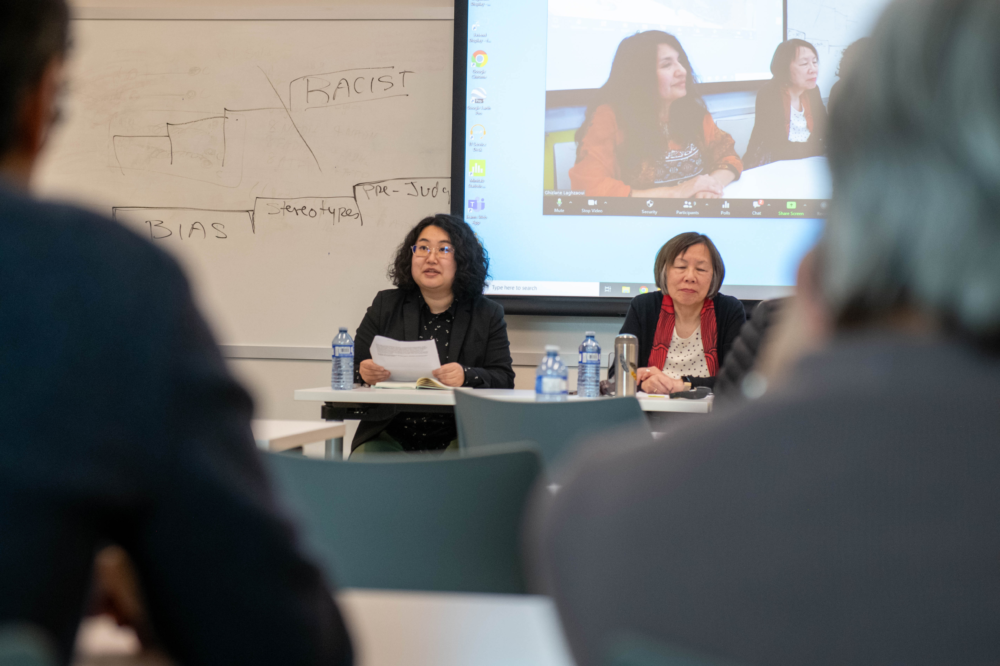
As it happens, my journey of becoming more aware about the influence of race and ethnicity among other factors led me to discover the Race and Antiracism Network (RAN) at UFV. I immediately became a fan of the work they do, their resilience, and their mission. Started in 2006, RAN was known as the Discussion on Racism Group, before changing their name in 2010. A volunteer-based independent organization, RAN is committed to being a safe space for people affected by racism, sexism, homophobia, and other forms of prejudice. They develop strategies, outline potential policies, host events, and tackle projects to combat issues related to intolerance not only within the university, but also the Fraser Valley and society in general.
Still, right after learning about this initiative, one thought immediately came to mind:
Why am I just hearing about this now
As a student, I feel like a network such as RAN holds a lot of importance in our university. UFV has a wide variety of students from all around the globe, each with distinct backgrounds, bringing immense diversity that is worth celebrating and protecting. I believe a body such as RAN is instrumental to supporting this, and yet, it was alarming to me that I had heard nothing about it until a couple of months ago. With this in mind, I want to spread the word to help RAN get the spotlight I’m convinced it deserves.
The leaders behind RAN
To understand more about RAN and highlight their role within UFV, I spoke with past and present chairs of RAN, who both shed some light on what RAN has to offer. Alongside Dr. Jas Uppal Hershorn, Dr. Ghizlane Laghzaoui is a current co-chair of RAN. Her passion for RAN’s mission is partly due to the personal experience she has with intolerance.
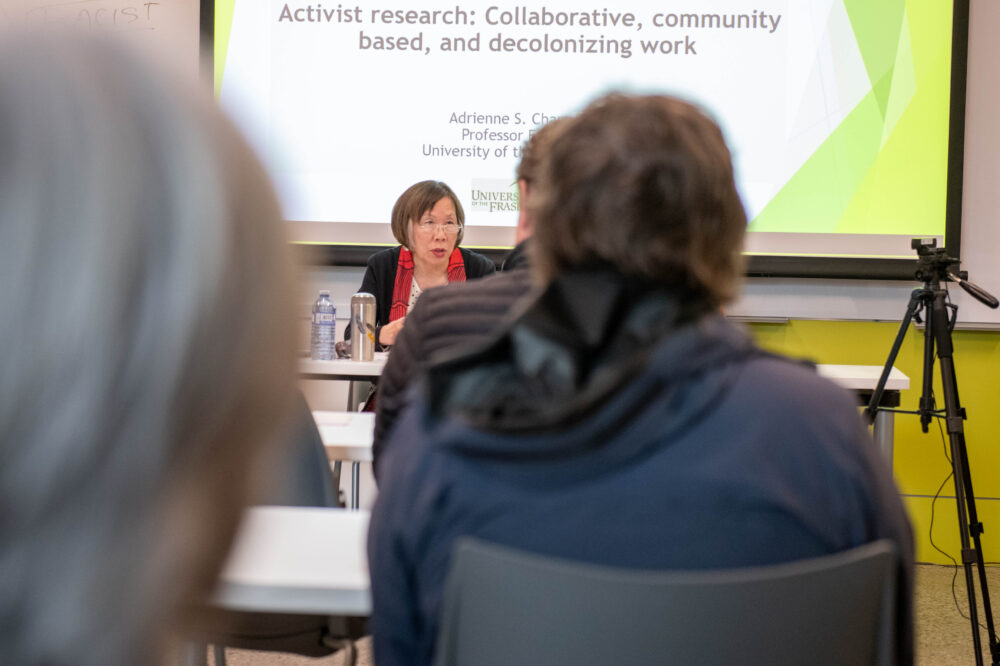
“The battle is something that was very close to my heart, being myself for so many years [a] victim of discrimination, and particularly racism and Islamophobia … It informed my position but it also informed my involvement in that fight against racism wherever it rises.”
Laghzaoui taught at Simon Fraser University’s French department for over a decade before joining UFV in 2011, where she was invited to join RAN by her fellow colleagues. Her research centres around immigrant teachers, particularly from French communities, and the challenges they face in professional integration, such as discrimination and underemployment. She currently helps mentor Francophone women new to British Columbia to integrate in professional spaces.
Laghzaoui shared that one of RAN’s greatest strengths is that as an independent initiative, members can speak their minds without being influenced by any administration. Laghzaoui shared what it was like to become a part of RAN, and the powerful impression this group left on her.
“What I loved the most about [RAN] when I first stepped in the room was the free spirit; we were all free regardless of where we were coming from [and] what our position was in the university. I’m speaking about a room made of senior admin people of colour, faculty members, staff, even [a] few students. Walking in there and seeing that [there was] no hierarchy and [that no one was] being singled out because of who [they were] was amazing to witness. RAN was, and still is, an amazing experience.”
Dr. Sharanjit “Sharn” Kaur worked as a co-chair of RAN for one full term. She is now a sessional faculty member in the History department at UFV, with a doctorate in History through a critical race theory lens. She is an avid anti-racism advocate and the co-author of Challenging Racist BC: 150 Years and Counting, and served as the coordinator of UFV’s South Asian Studies Institute for 12 years.
Elaborating on the work RAN does within the university, Kaur highlighted the importance of the work they do and the power it holds given that it draws from facts and research.
“I think the criticality of what the Race and Antiracism Network fosters is unlike any other organization on campus. The way we call for accountability within the institution is very powerful, but that accountability is also based on research, academic grounding, and lived experiences of people who are within academic spaces. So it’s not just calling for accountability for the sake of it, it’s based [on] facts and truths. I’m really proud of that work over more than a decade that this organization has been doing.”
Kaur mentioned that RAN holds monthly meetings to discuss happenings on campus, current research being done, and to provide a space for faculty, staff, and students who have been racialized to speak about their experiences, all in an effort to seek accountability from the system that may have enabled it to happen in the first place.
Kaur described RAN’s role within UFV, she spoke about how their group has always hosted an event to honour the International Day for the Elimination of Racial Discrimination which takes place on Mar. 21. She listed some of the activities they’ve done in the past to prepare for this date, such as hosting student panels, bringing in speakers at UFV, and using their reports to determine their progress in building anti-racist and inclusive communities at UFV.
This year, RAN will host the event for the National Day for the Elimination of Racial Discrimination on Mar. 19th, this year’s event is titled Anti-racist Praxis in Post-Secondary: Action at Work.
RAN’s strengths and challenges
However, according to Kaur, throwing these events has not been without its share of challenges.
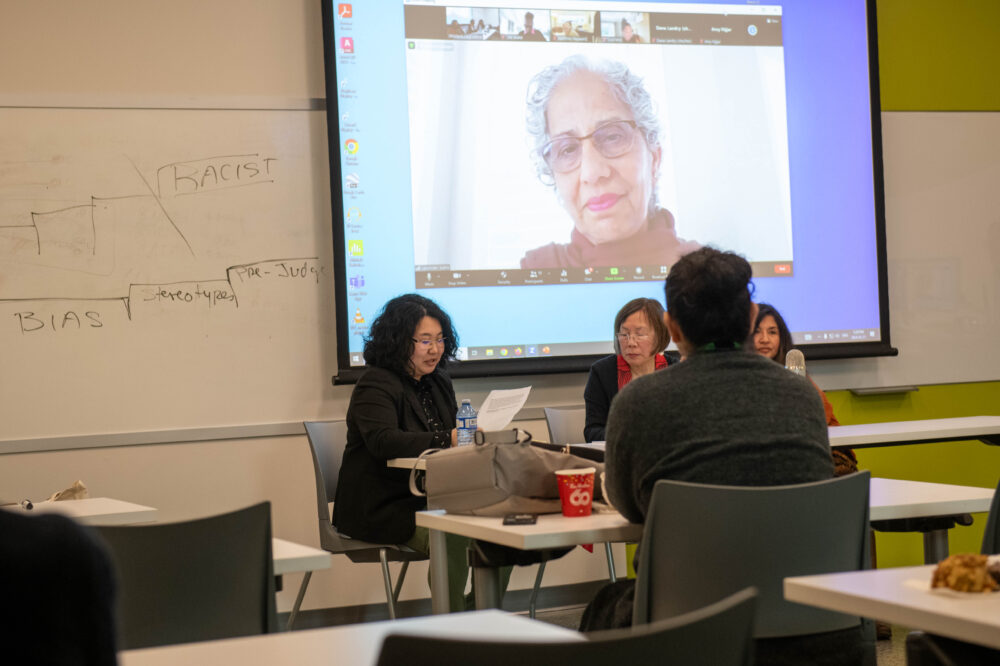
“We don’t have any consistent funding [so] it’s hard to be able to devote the time and energy. Faculty members don’t get forced releases to do this work or to be co-chairs. It’s all volunteer-based. So because of that, space and time is limited.”
Kaur mentioned that despite RAN’s limited ability to host more events, they do hold monthly online meetings to discuss happenings on campus, current research, and to provide a space for faculty, staff, and students who have been racialized to speak about their experiences, all in an effort to seek accountability from the system that may have enabled it to happen in the first place.
Despite RAN’s greatest asset being the amount of freedom they have to speak without any form of censorship, Laghzaoui explained that this liberty often comes at the price of the work being exhausting because of their limited amount of resources.
Part of the work RAN has been involved in is advocacy efforts, including the establishment of an accountability process at UFV to promote anti-racism in different areas of leadership, operations, and governance. This process also aims to urge UFV to design an accountability policy specifically to prevent and counter racism within the university. Kaur expressed that one of the most frustrating aspects about UFV not having a specific anti-racism policy is that the supposed development of said policy has been going on for over five years, which she explained is a long time for one policy to be established. She mentioned that, to her, this comes off as UFV not truly caring about forming an anti-racism policy, and that she feels like they are just performatively going through the motions.
“I’ve been hearing about this for at least four or five years since [the] Black Lives Matter resurgence. The cynic in me is just like ‘do you actually wanna make policy change? Or is it just [to] tick [a] box?’ Just pretending to have the conversation for the sake of pretending like you care.”
Laghzaoui mentioned that another big challenge that RAN faces is their visibility. Since they operate independently from UFV and all their work is done by volunteers, it leaves them in a position where their resources are very limited and they rely heavily on networking to spread word about their work and events. She explained that when there is something they’d like to share with UFV students, they often reach out to the Student Union Society (SUS) to help them generate engagement, with mixed results.
“We always wanted to have more students participating in the life and the work of [RAN], yet it was a little bit difficult. We would reach [out] to the executive of [SUS] because we thought that’s where it was going to happen, and they would share the information [with us]. They [eventually] would do their part, but it was very hard to get the [SUS] executive on board. Very hard.”
Since they do not have great visibility, it can become complicated to find new people willing to take on voluntary anti-racism work. Currently on her third co-chair term, Laghzaoui mentioned she is happy to have Uppal onboard for the adventure of co-chair on her first term, and grateful that Uppal has brought a new and refreshing leadership to RAN. Laghzaoui affirms that even if the work they do can be taxing, they will continue to do it. They strive to be there for every student that feels powerless and in a vulnerable position, to help them feel like they belong and to encourage them to use their voices.
RAN’s impact
One situation that Kaur and Laghzaoui brought up to exemplify the work RAN has done for students in the past was the fact that RAN was the first group to become aware and respond to the issue of Baker House — one of UFV’s student residences — attempting to force all of its international students to leave the building during the COVID-19 pandemic. Laghzaoui expressed that the most meaningful part of the work done started with students trusting them enough to ask for help and guidance at a vulnerable moment when they did not know where to turn. Laghzaoui shared the type of support RAN was able to provide for them.
“On the public side, we were the first ones because we [were] alerted by students. We managed to get information around it, alert various services, alert the faculties, deans, and say that something needed to be done to support international students in terms of COVID, [the] closing of borders, being either imprisoned here or asked to leave, [and to find out] what was going on.”
RAN exists for the students at UFV, to provide them with a space to be able to share their experiences of racism and to offer an ongoing strategy for change in the community. Kaur stressed that what happens within UFV does not happen in isolation, but instead, she believes it is a reflection of the community of Abbotsford. She shared that her personal goal is to help students feel like they have a voice, and that they belong, explaining that a mission of hers is to help students understand how oppression works and to embolden students to speak up against social injustice.
However, according to Kaur, since RAN broke the story about Baker wanting to evict the international students during COVID, she feels they have been perceived as an enemy by the UFV administration. Still, Kaur believes that holding someone responsible does not automatically mean you’re on opposing teams. On the contrary, she believes that ensuring accountability is a way of showing up for the UFV community.
“We are not an adversary to the president’s office, to the VPs, to admin, to the deans. We are nobody’s adversary. We are simply here to, from a research and a critical lens perspective, shed light on some of the things that we see take place on campus, and that doesn’t make us an adversary. It means we’re actually trying to build a better community.”
Ghizlane further shared that RAN has recently been collaborating with students to flag various issues they’ve noticed on campus.
“This semester we already did work with some students on a few issues that were really important to them. We don’t always have solutions … but our strength is that we are able to speak on their behalf.”
Echoing a message
Learning about RAN and what they have to offer made me want to use my voice to help them get more visibility, because I truly believe they deserve it. The work they are doing is meaningful, tangible, impactful, and to me, there is a special kind of beauty and empowerment that comes from doing something out of passion and belief. Putting in the effort to create a positive impact even when you might not get anything in return is something I greatly admire and respect.
When asked if they had a message they wanted to convey to UFV’s community, Kaur noted the unique challenges faced by racialized alumni and encouraged them to consider mentoring current students.
“Racialized alumni get the short end of the stick … We have the benefits of being in a community where you can get a lot of opportunities, but at the same time, those opportunities still continue to be afforded [only] to a certain group of people … I want those alumni to see the benefits of mentoring other racialized students or currently part of the UFV community to call into account the same way RAN does … My ask for UFV alumni would be to continue to mentor students who are currently on campus so that they can get the opportunities, because I don’t think they’re gonna be handed to them yet by the institution.”
As for Laghzaoui, she shared a desire for students to take advantage of what RAN has to offer.
“One of our dreams is to have a RAN run by students, like a branch that they would [use to] do things that matter to them. [For them to know] that they [can] cooperate with us in terms of advocacy, lobbying, [and that] we would participate. It’s important that we tackle this issue on all fronts, and any front is welcome.”
