

On Aug. 10, four members of the press from Al Jazeera and one independent journalist covering the atrocities committed in Gaza were killed onsite by an Israeli strike. The Israeli army defended its actions, claiming that the strike was targeting reporter Anas Al-Sharif due to alleged “terrorist affiliation,” — conclusive evidence was not presented.
At least 241 journalists have already been killed since the beginning of this war. In the wake of the Day of the Imprisoned Writer (Nov. 15) and International Journalist Day (Nov. 19), it’s impossible not to think about the fragility of truth when voices are silenced. This slightly political personal reflection is not about which side of the war you are on, but about veiled history and the hopelessness of a media blackout through the lenses of an idealist. So, buckle up as we take a detour into Apr. 5, 1992, in my own home country, Peru, when Journalist Gustavo Gorriti was kidnapped by members of the Peruvian intelligence during Alberto Fujimori’s self-coup, just for trying to expose Fujimori’s crimes.
Gorriti was held for two days before international pressure forced his release. By then, he had already uncovered Fujimori’s Intelligence Chief, Vladimiro Montesinos’s drug ties, making himself a target of the corrupt government — it came to no surprise then that he was publicly smeared, captured, and threatened to silence.
This is not the only instance of intimidation tactics to manipulate the widespread narrative, with Peru having a long history of media corruption. The international non-profit organization that defends freedom of press, Reporters Without Borders (RSF), has consistently rang the alarm and urged the Peruvian government to ensure journalists’ safety, even now.
Back then, in times of terrorism, things were falling apart. The horrors didn’t just come from terrorist organizations like Sendero Luminoso [Shining Path] — they came from the authoritarian government of Fujimori, too. I did not live through this era of chaos. In fact, I almost did not live at all, as my mother was serendipitously saved by one of her friends who saw her at a bus stop and offered her a ride just minutes before a car bomb exploded right where she had stood — one of the many attacks during those years, when bombs disrupted ordinary routines and civilians were caught in the crossfire of a war they never asked for. Others were not so lucky; pure chance and a good friend saved my mother’s life, which in turn saved my sister’s and mine.
My sister Valeria, or “Vale” for short, and I are the kind of people who grew up believing in fighting for our ideals. For “justice.” I was never a fan of politics, but I’ve always been around people who are well-informed on the matter. There was no Sunday afternoon that was not filled with a political discussion between my parents. Considering their past experiences with terrorism and the government, it made sense they were the ones who, early on, emphasized the importance of exercising our constitutional rights and defending our core values — especially against a system of oppression. We were lucky to have that, and I’m certainly aware of the privilege of having that education.
But Peru overall has an issue with education, and how can you make an informed vote without that? How can education improve if we keep electing nothing but corrupt and incompetent leaders into power due to that lack of an informed vote? The reality is that Peru has been stuck in an endless cycle of ignorance and abuse that we don’t know how to break free from, but we keep on fighting, we keep on questioning, and we keep on marching.
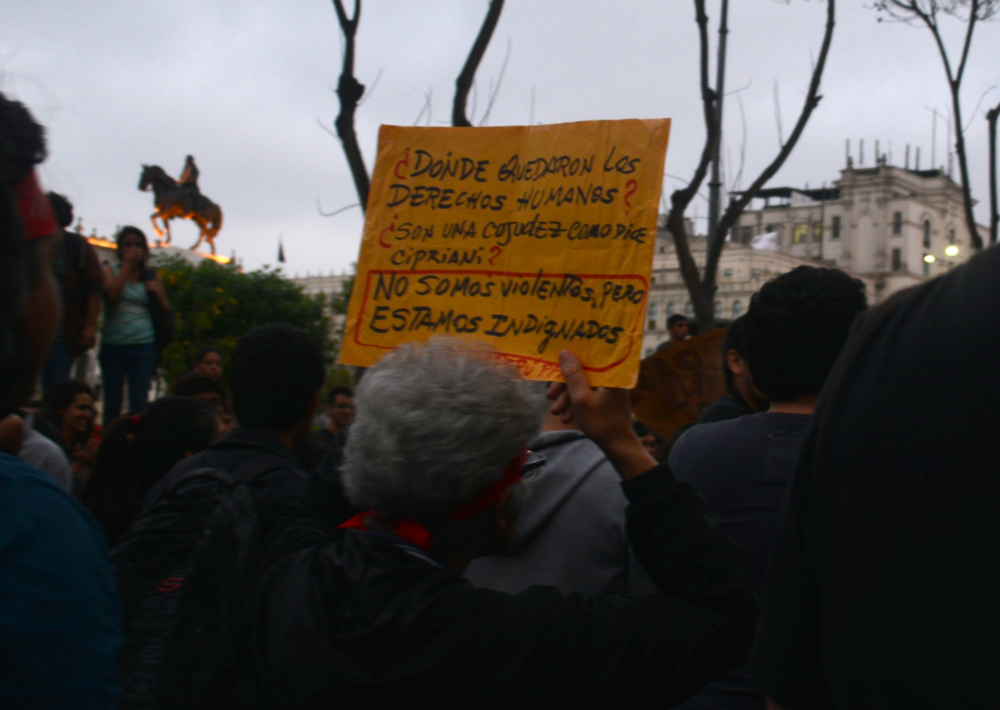
It was 2017 on Christmas Eve when a political incident ruined the holiday for many people, us included. Nothing screams subtle corruption quite like the government issuing a pardon to ex-dictator Fujimori at Christmastime — expecting people to be distracted with their family celebrations. It’s been a long time since that moment, and I still remember the shock of hearing the news as I was eagerly waiting for my Abuela’s delicious turkey and tamales to be ready.
Back in 2016, when Keiko Fujimori first ran for office, many voters rejected her to prevent her father’s pardon, who was convicted of human rights abuses, murder, kidnapping, embezzlement, abuse of power, bribery, and corruption during his presidency. Yet it was the opposition — elected on the promise never to grant it — who ultimately did grant it. The result was tragically ironic. I still remember the utter indignity and betrayal that overcame us. There were many protests in the days following the news, and not unexpectedly, Vale and I decided to join them.
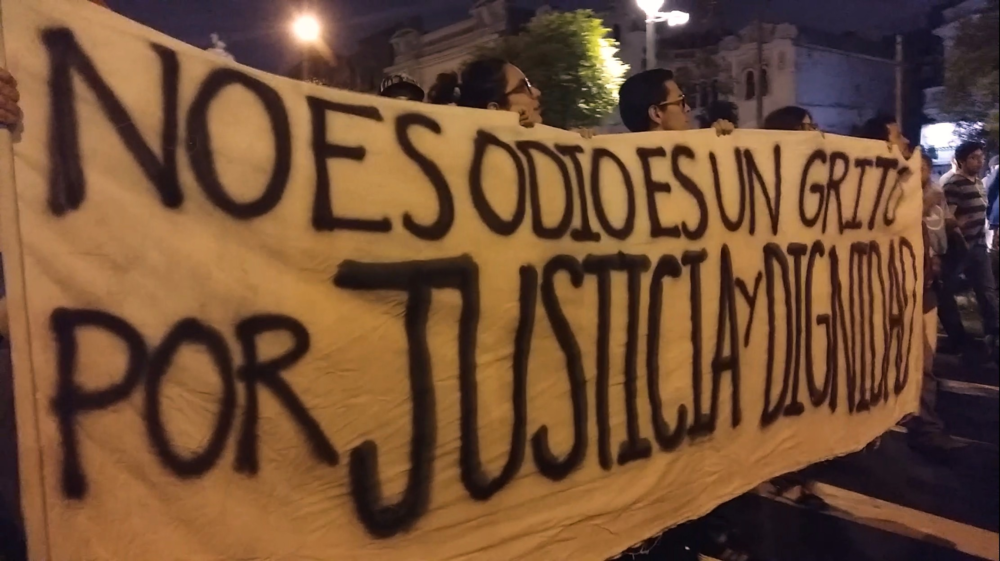
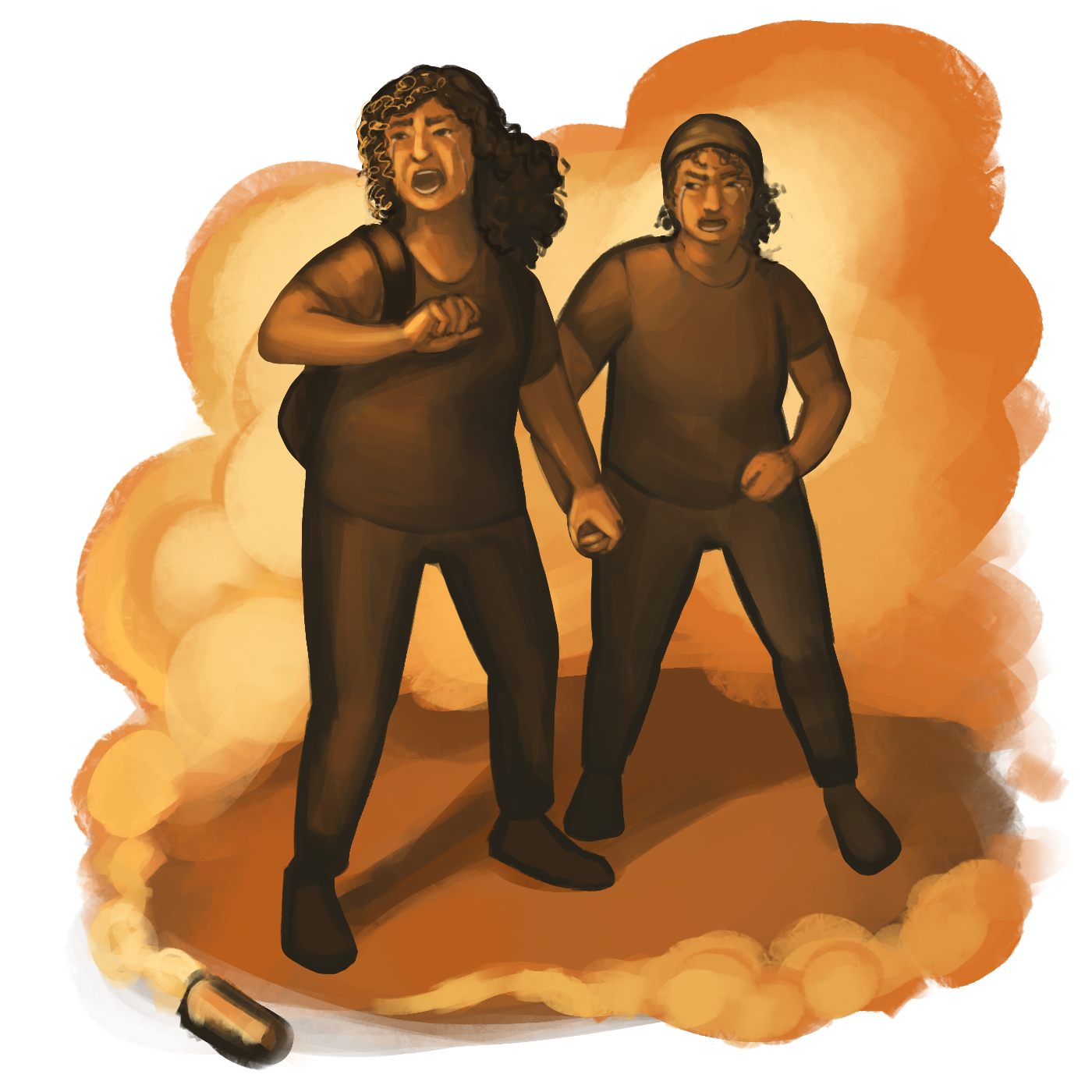
Despite the palpable and understandable fury, the first protests remained peaceful, at least on our side. It wasn’t until we saw white vapour and people dispersing that we realized something was wrong. Without provocation, without violence from the protesters, the police decided it would be fun to throw a tear gas canister at us, and yes, I say fun because they were laughing and smiling as they watched from afar how people ran. That was the first time my sister and I had a close encounter with one of those tear gas bombs; it was also the first time we faced the cruel attitude of the police — what a privilege in itself that it took that long.
For a moment, I naively thought the canister was harmless; it looked like thick vapour. That wasn’t such a big problem, right? Of course, I was wrong. As if it had a mind of its own, the canister shattered my expectations. In the blink of an eye, my nose, throat, and chest started burning. Tears involuntarily gathered in mine and my sister’s eyes. A feeling of fear and insecurity arose in the people around us. Nothing but big smiles on the faces of the police. Smirks that made everything burn in me once again, but not just because of the tear gas. Vale and I held hands and began furiously chanting as we skirted around the metallic tin to continue the protest — defiance in our glare. People joined and followed the path we had set because that’s the thing about marching on: it inspires people to keep moving forward alongside you.
It wasn’t until later that night, when we returned home, that we realized how lucky we had been because we reached our destination with only a single tear gas can thrown at us. The protesters taking the alternative route had to deal with so many they lost count.
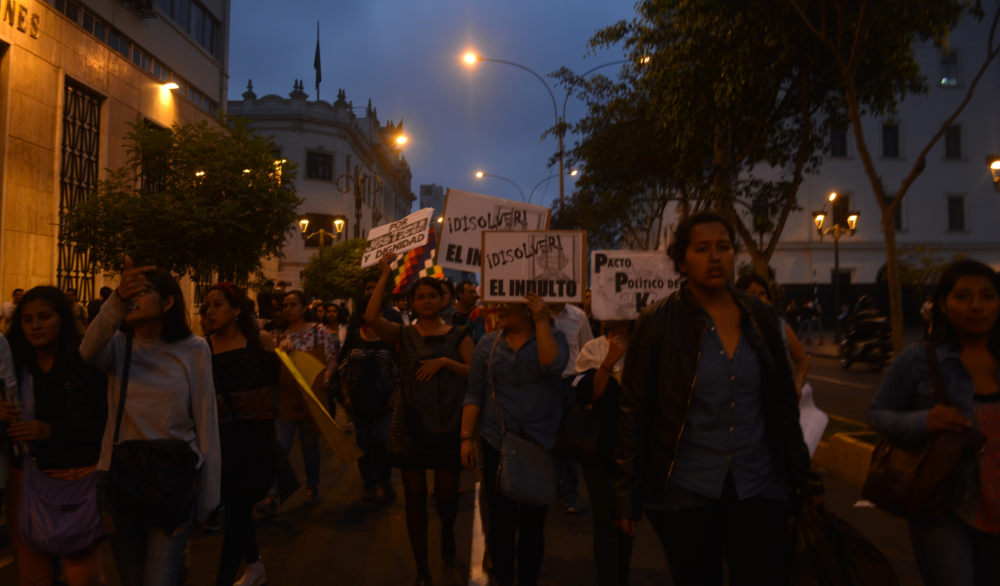
That day, we went to bed eager to fight, determined and willing to resist the oppression. We went on to the next march. This route started at Lima’s Kennedy Park. This time, we were fully prepared for eventualities, toting water, vinegar, a handkerchief to cover our faces, fully charged cell phones, and an ID. Back then, those were the (sadly wrong) recommendations — it was widely believed that using vinegar to counteract the effects of tear gas was effective. This couldn’t be further from the truth. Vinegar will burn your airways, even if you don’t perceive it at first.
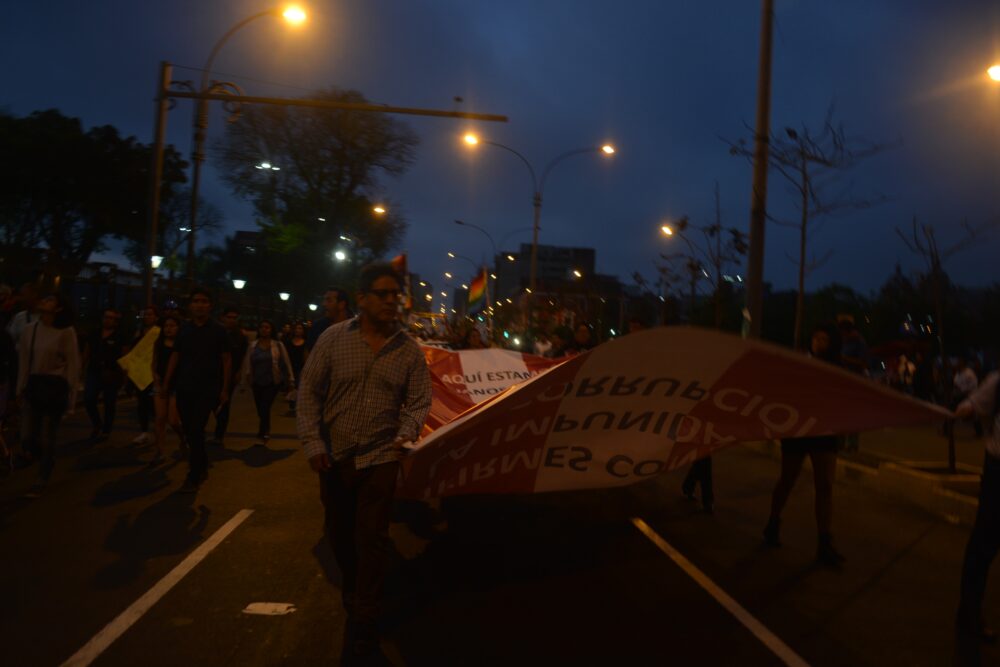
When we arrived, we saw many people getting ready for the protest as well as some curious tourists. There were several policemen, too, who would supposedly accompany and protect us on the way to the main square. That surprised us. After what they did in the previous march and what (we heard) they did with the alternative route march, we had doubts. Would they truly protect us? Maybe what had happened before was an isolated incident, and they would indeed ensure our safety. That’s what the police are for, right? I had family who were members of the police force, and we misplaced our trust in that.
Vale and I were waiting calmly for the start of the protest when suddenly, an old woman standing nearby, holding a part of a huge Peruvian flag, saw us and signalled us to come over and hold on to the flag too. Vale and I looked at each other hesitantly before looking back at the woman as if asking, “Are you sure you want to entrust us with this?” We didn’t say anything, but the woman must have understood because she nodded resolutely and pointed to the flag again. We approached and grabbed onto it. The press was next to us, recording and taking photos. Everything seemed fine. Everything seemed safe, and our fears unfounded. And then the march began.
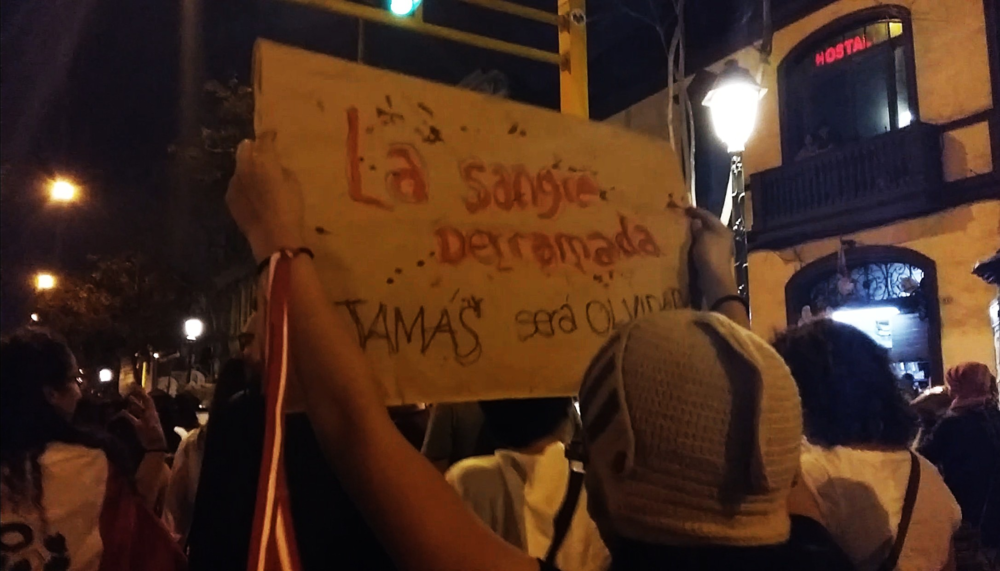
Flag in hand and determination in our hearts, we started the protest. The police walked alongside us, protecting us. Throughout Miraflores‘ district, the march seemed the most peaceful I had ever attended… But then we left the district. The tourist district, that is.
There was a tank in the middle of the road, which seemed strange. Nerves began to rise, but no one stopped, and we passed by it without much fuss. There didn’t seem to be any problem until I looked around, and, oh, surprise, the police were no longer there; the press was no longer there. I quickly told Vale, and she looked around with concern. Still holding the flag but now alert to danger, we continued marching on. We were wary but truly had no idea what awaited us. A little further ahead, we saw a barrier of police officers and another tank — definitely in my top 10 “Oh fuck” moments. They began to throw tear gas canisters, three this time, people didn’t understand, Vale didn’t understand, I didn’t understand.
The protest was peaceful, so what the hell was going on? The route was even publicly announced in Peruvian media at the time — although these articles have since been erased from existence. People started desperately running as everything filled with toxic smoke. I realized then that the police had made us deviate from the route on purpose. A guy on his bike stopped next to us and kicked the canister that had fallen relatively near us, his eyes filled with rage. A couple of people had let go of the flag to either flee or cover their faces. As she held the flag, Vale shouted to me that we had to hurry. But what about the flag? We couldn’t go too fast because there weren’t many left holding it, but those of us who understood its significance refused to let it drop, and worked together to carry it better.
It might sound silly to you. Unquestionably, the safest thing to do would have been to drop that flag on the ground. Those who know me are familiar with how much I criticize my country, how much I hate misogyny, discrimination, and homophobia — all those customary gems of a conservative country such as mine. Never in my life did I see myself fighting so much for a country that I thought I hated. I do hate it, and yet, even so, there was absolutely no fucking way, that I would let that flag go before ensuring it was, at the very least, safely in enough hands to keep it from falling.
The route became improvised, our path constantly modified by tear gas canisters, which (unknowingly) redirected us exactly where they wanted us to be. A large group of people remained, the flag again secured in the hands of several people; from time to time, we ran to cross streets; we ran to get away from the gas; it was almost night by then. A few blocks from the Risso shopping center, I was hit by a feeling that screamed something was wrong; that we should get the fuck out of there. I saw Vale, her face red from the tear gas and the running, and I stopped her, letting go of the flag for the first time.
“Something is wrong,” I told her. We carefully looked around and slowed down. By the time we realized, it was too late. We had fallen into their trap. Tear gas was coming from everywhere. Vale and I held hands and ran toward the shopping center, because there was no way they would throw one into the mall, right? No, they didn’t care. Shoppers who had nothing to do with the march were scared and confused. A tear gas canister smashed right in front of me in the middle of the crossing, which reflexively stopped us dead in our tracks on our way to the mall. It almost hit us. Like a hydro flask falling, its echo rang in our ears. Vale and I slipped between the cars to take cover; we could hardly see, we couldn’t breathe. We took refuge in a nearby food establishment with another group of people. The cooks gave us vinegar, trying to help us dissipate the effects.
When did we stop counting the number of tear gas bombs? When did things get so bad? How can police use brute force for no reason? This would surely be reported; Risso was nearby, and people would complain, right? They would punish those who had abused their power, right?
After thanking the establishment, we continued our way, dispersed because there was no longer a march, just people scattered walking to the pre-determined destination.
They had succeeded. They had destroyed the protest.
Vale and I arrived at that march with resolve and hope — with the desire to fight for a fairer system … Vale and I returned home with our morale down and our spirits broken, with no strength or desire to return.
None of this sounds familiar to you, and none of this sounds familiar to most people in Peru either. There was no news about what we had been through. The truth had been buried, leaving in its stead the silent resignation of being a fallen tree — knowing you made a sound, knowing it mattered — yet realizing no one was willing to do anything about it. Can we blame them when we come from a place that will threaten, kidnap, and murder those who dare to defy the corrupt system?
It wasn’t until 2020 that a new protest against Peru’s then President, Manuel Merino, was in the limelight. They usually call all of these violent protests, but where is the violence coming from? Inti Sotelo and Bryan Pintado were killed and countless videos had to be recorded for the authorities to do something. Even with many from the press hiding how bad things were at first. Even with our leaders denying all of it, people took matters into their own hands and exposed the truth.
Vale and I did not attend the 2020 protests — we don’t really go protesting anymore, aside from Lima’s annual Pride parade. I remember following the demonstrations from afar, seeing how terrible things were, knowing that even then, I couldn’t completely grasp the level of desperation, the breaking of wills, of spirits that went on. I do know that all those who fought won’t ever forget what happened. I know that those who are supporting at the front will never be able to erase from their memories the sound of the projectiles, the sensation of the gas, the pain of the bullets, the blood of their wounds… the endless disappointment as they realize that those who should protect them are the ones attacking.
What happened to Vale and I is nothing in comparison, and even so, eight years later, fireworks and loud noises trigger me into a nervous breakdown; the smell of gunpowder makes me nauseous, and our bodies tense up when we pass by police officers. The aftermath of that experience has stayed with me, and is likely also felt by each of those people who bravely fought for all of us in history.
Peru ranks a dismal 130 out of 180 in the RSF World Press Freedom Index. Israel is 112, Palestine is 163. Canada is luckily number 21, but last year, it was doing better at 14. Freedom of the press is fleeting — just look south of the border, where democracy is being dismantled in plain sight. The prohibition to denounce is a sobering reminder that authoritarian regimes and government abuse are only a few steps away. Press freedom isn’t just a metric — it’s a frontline battle for truth, accountability, and human dignity.
If you’re still here and you’ve read through this whole story because, like me, you constantly worry about which war is coming next, about whether you’ll get a say in it, if you get a say at all — maybe you’re on an anxiety-induced red-eye, or just decided to power through this article out of pure chance and curiosity — I want to tell you to not lose hope. The fight is hard but worth it, not just for us but also for the generations that follow. Things do change, and there will come a time when you have to decide to take a stance against the abuse. To demand the basic rights we are entitled to, to witness and to denounce.
Don’t feel bad for not being able to go to the rallies if you can’t (I say this to you as much as I say it to myself). Call your representatives, make art, write an article, make your banner, and if you can, donate to aid brigades, to victims, to a cause you really believe in. Every bit helps.
If you’re one of those people out protesting, risking your safety at dangerous sites to get an accurate perspective, or continuing to investigate despite threats, thank you — for fighting for us, and for risking your life to demand justice. There aren’t enough words to express my admiration for those who put their hands in the fire for a better future. For all those who risked everything to expose the horrors of the world, the exploitation, the brutality, the slaughters. For all those who did not make it in the end.
If a tree falls and no one listens, it still falls. And we march on.
