

Horror movies are taking centre stage this year, which is rather shocking considering that movie theatres are dead! At least, according to media conglomerates like Netflix’s co-CEO Ted Sarandos. When asked about the longevity of movie theatres in an interview at the 2025 TIME100 Summit, Sarandos referred to the theatrical experience as “an outmoded idea.” This is also an opinion seemingly shared by most major film studios, which are increasingly skipping theatrical releases and going straight to video-on-demand.
And yet, there seems to be a very specific genre of film that is repeatedly making major headlines — horror. I believe these films not only shatter mainstream ideas and expectations for film, but they also reveal a rising trend in the film world.
In Feb. 2026, Iron Lung (2026), which was entirely funded, created, and distributed by a single independent creator with a budget of around 4 million USD, shattered all expectations, earning just over 50 million worldwide at the box office. Originally premiering at the Toronto International Film Festival (TIFF) in Sep. 2025, Obsession (2026) beat Disney’s Star Wars: The Mandalorian and Grogu (2026) with its May 15, 2026 theatrical release, bringing in over 300 million USD. Centred on a horror concept that originated as a 4chan post, 20-year-old Kane Parsons’ debut film Backrooms (2026) raked in 330 million USD.
Mark Fischbach’s Iron Lung, Curry Barker’s Obsession, and Kane Parsons’ Backrooms are all remarkable for several commonalities. The first is that they are all independent films directed by YouTubers.
Fischbach, better known online as “Markiplier,” has spent the last 14 years posting a variety of videos and series — one of which, In Space With Markiplier (2022), earned the creator an Emmy nomination. Parsons knows the lore of the backrooms well, having first gotten his start as “Kane Pixels,” where he posted self-animated videos set in the fictional, never-ending labyrinth. The thrilling yet tragic depiction of a woman having her autonomy stripped in Obsession is a stark contrast to Barker’s YouTube channel “That’s a Bad Idea,” which features mainly crude but hilarious sketches.
This is what I think serves as a major contributing factor to these films’ success, and it’s where I can speak from experience.
I’ve managed social media accounts before. The personal nature of running an online account fosters an environment for quickly learning from the audience that I think many studios aren’t subject to. I don’t have to wait to hear feedback from viewers; I immediately see it in comment sections. And I can look at the analytics myself, which are sometimes accessible mere minutes after posting.
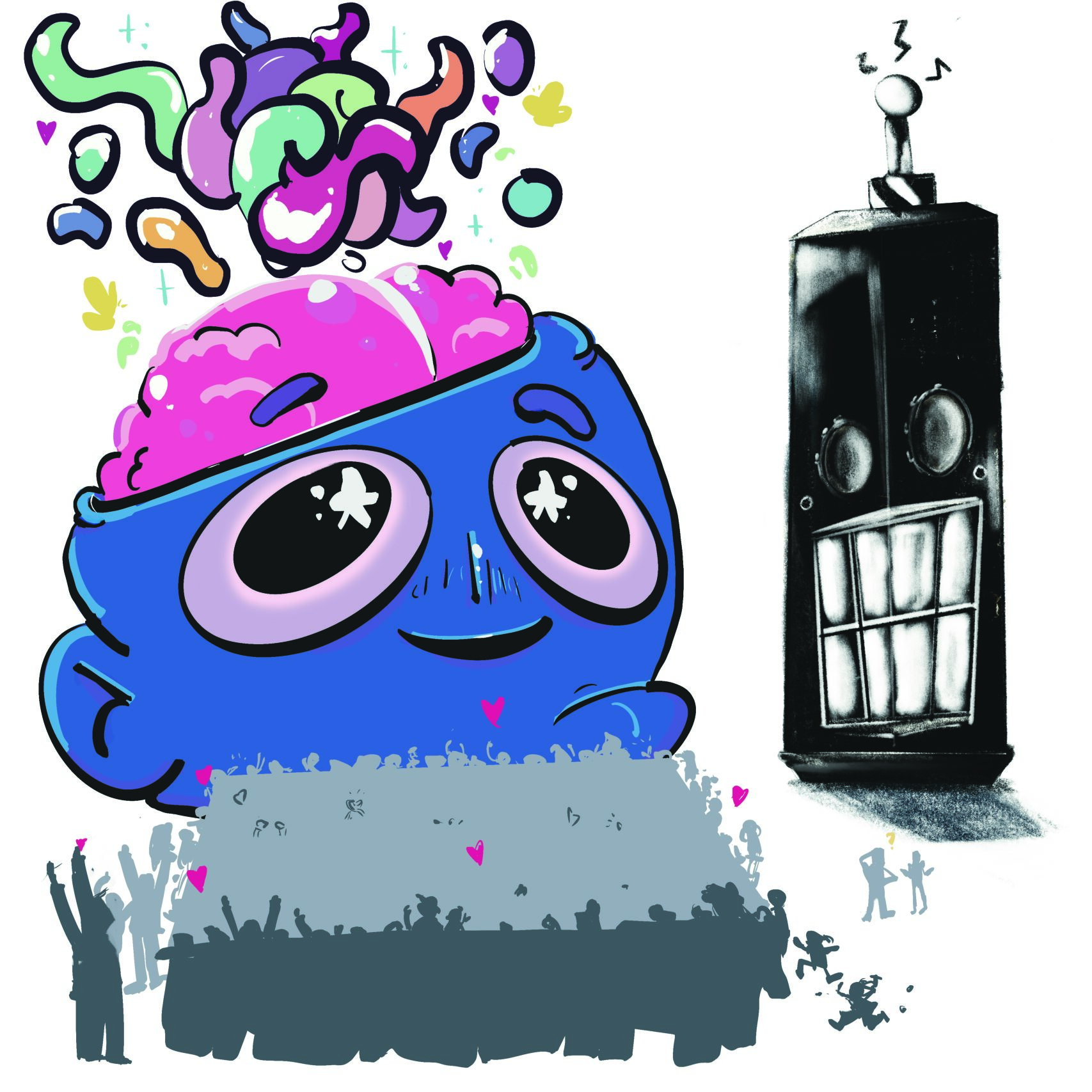
At times, it almost reminds me of being on a stage. Seeing people’s immediate reactions to what I create allows me to adjust in real time. It is very easy to learn what attracts viewers when you handle everything yourself. A perspective that I don’t believe can be achieved working with a large, multi-layered company that requires copious and, dare I say, detrimental amounts of bureaucracy.
Another notable element of these films is their emphasis on practical effects. In the age of CGI and AI-generated slop, these three films are a breath of fresh air. Fischbach claims that Iron Lung broke the world record for the most amount of fake blood used in a film. In an interview with Deadline in Feb. 2026, Fischbach, who had previously studied biomedical engineering, did the calculations himself and found that they used around 80,000 gallons of fake blood during production — which would dethrone Evil Dead (2013).
The endless twists and turns of Backrooms were almost entirely filmed on a set built on a Vancouver soundstage. According to an article published by Architectural Digest in early June, the production team for the movie built 30,000 square feet of hallways draped in dull-yellow wallpaper and musty old carpets — a set so extensive, it was housed across four soundstages and utilized scaffolding to create multiple levels. Chiwetel Ejiofor, the actor who portrays Clark, even admitted in an online interview that he and other crew members often got lost on set.
The bone-chilling scene in Obsession where Nikki stands in a darkened bedroom corner, her barely visible face contorted and disturbingly uncanny, was achieved through practical effects with contour makeup. Some scenes in which her arms and legs moved in unnatural ways were simply footage played in reverse.
Dedication to the craft of filmmaking, as displayed by these three creatives, is what I believe truly speaks to audiences. The attention to detail and willingness to make their films feel as real as possible treats us, the viewers, with respect. I don’t think movie theatres are going anywhere. I think audiences were just waiting for creators to focus on filmmaking as the art form it is, rather than a means of making a profit.
