

Dr. Eric Spalding is an associate professor of Media and Communication studies in the School of Culture, Media, and Society at UFV. Spalding also specializes in teaching courses on Journalism.
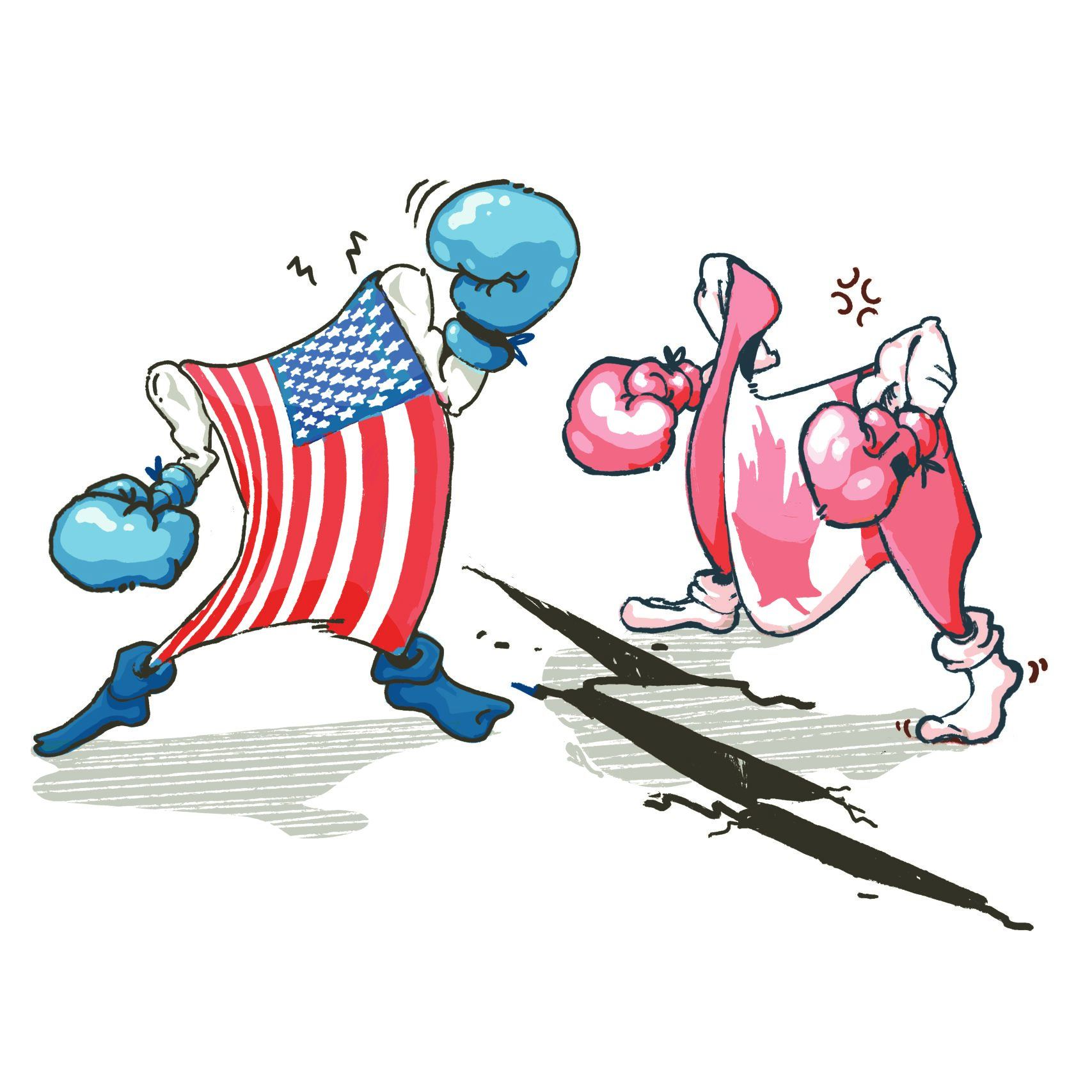
The trade war between Canada and the United States is ongoing as President Donald Trump is imposing 50 per cent tariffs on Canadian imports such as farming tools. Dr. Spalding offers expert insight into how the trade war between Canada and the U.S. continues to shape the political landscape and what the ramifications of the U.S. tariffs and Canada’s counter tariffs are on society.
“Much damage is being done through this trade war, and people are waiting with anticipation for the US midterm elections in the hope that Democrats can gain a majority in Congress and maybe even in the Senate so they can push back against Trump’s destructive behaviour.”
The mid-terms are set for Tuesday, Nov. 3, 2026, and are designed to give voters a chance to evaluate the president and what he’s accomplished so far as their national leader. This mid-term election can potentially change the way the government is put together, as people may vote for more members from the current government’s party to congress or for members from an opposing party. The latter would give a bigger majority to the opposition, making it harder for the president to continue implementing their party’s agenda.
According to a recent news release from the Canadian government, beginning on Sept. 8, they will be implementing matching 50 per cent retaliatory tariffs that would be equal to the proposed tariffs worth 27.6 billion dollars. Dr. Spalding agrees with the Prime Minister’s approach.
“What Trump is doing with his across-the-board tariffs is destructive for many workers in the manufacturing sector on both sides of the border and beyond. Many jobs have been lost already. I personally think that what Mark Carney is doing is the right thing. He’s not letting Trump push him around more than he has already.”
He added that having retaliatory tariffs in place is a good strategy both economically and symbolically.
“The economic reason has to do with making Americans suffer through job losses and higher costs for consumer goods. It is hoped that such Americans, especially in some of the border states, will complain about the situation and vote against Republican candidates in the forthcoming midterm elections. The symbolic reason has to do with Canada not allowing itself to be pushed around by its neighbour. The intent is to show Carney as a strong PM.”
According to a recent article by CBC News, the high tariffs that Trump’s administration imposed on Canadian goods is also having a negative effect on farmers in the U.S., hurting their ability to afford things like fertilizer. Regarding the destructive nature of the present tariff war, Dr. Spalding explained how workers and consumers are the ones being predominantly affected by the tariffs.
“The damages caused by this tariff war are to workers on both sides of the border. People working in the manufacturing sector in particular have been losing their jobs, and more job losses are likely if this trade war goes on. There are also damages to American and Canadian consumers who are paying higher prices for consumer goods. Canada’s economy in particular could go into a recession, which is why Carney has been traveling the world to strengthen economic ties with other countries.”
He added that there are similar correlations between an earlier trade war during the 1930’s and the current trade war between Canada and the United States called the Smoot-Hawley Tariff Act. This act saw high tariffs put on Canadian goods coming into the U.S., during the Great Depression. In 1935, the tariffs were decreased before being removed altogether in 1988 when the Canada-US Free Trade agreement came into effect.
However, in the midst of high tariffs and tense trade relations between the U.S. and Canada, Dr. Spalding remains positive and believes that circumstances will improve.
“If there’s anything I can say for students in particular, it’s that this issue will pass, and Canada will survive … I like what Margaret Atwood said in an interview recently. From her vantage point as an 86-year-old, current concerns need to be put in perspective. Atwood has lived through many political and economic challenges over the decades, and she has faith that the world can find a way to overcome the current ones.”

Rachel is working towards a BA with a concentration in English and Theatre. She has been employed at The Cascade since Fall 2021 as a Staff Writer and a Jr. News Editor. Currently, she is the sectional News Editor and enjoys meeting and interviewing people as well as taking long walks in nature. Rachel also likes to stay up to date on the latest trends and informs students through her fashion column entitled Campus Fashion.