


On Sept. 1, 1993, The Cascade newspaper was first established by editor Bryan Sikora. 33 years later, this student paper continues to run strong, featuring heartwarming and thought-provoking journalistic literature that is read by students and staff alike.
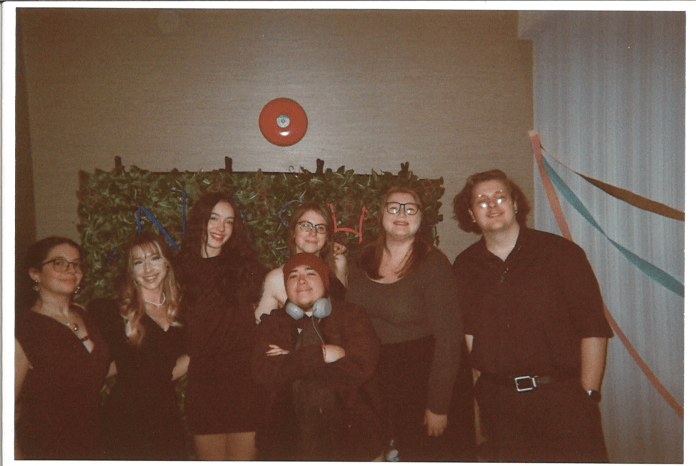
Back in February 2023, I wrote a feature about The Cascade, which included interviews with various staff members. Three years later, since the paper has seen considerable growth and changes in production, staff, and direction, I figured it was time to write an updated version featuring our current team. Let’s take a look at what some of the students who work behind the scenes have to say about their unique experiences at the paper.
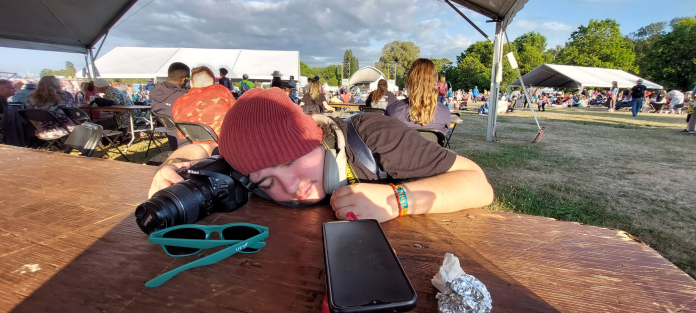
Sky Terrones
Arts Editor
Sky, what is your position at the paper, and some of your responsibilities?
I’m the arts editor, formerly junior news — a genre?shift worthy of cinema. I make sure the arts section stays fresh, diverse, and alive. It’s part curation, part coordination, part gentle chaos management — most of it fun.
What inspired you to want to work at The Cascade and why?
Unironically, the need for money — but also the recommendation from my academic advisor, who told me it would keep my writing brain active. As someone whose focus is fiction, I was hesitant at first. But once I started digging through the archive for an interview, I realized something tragic: not enough 2SLGBTQIA+ coverage. That’s when I decided [on] my new temporary mission: infiltrate and make everything GAY.
Thus, here I am — or, better said, queer I am.
What is a strength about The Cascade that makes the paper unique in journalism?
I genuinely think The Cascade is still uncorrupted by the bigger system. Big publications fall into clickbait because they’re tied to revenue; we aren’t in the same way, and it lets us keep fighting for integrity. Students still believe in a better world, too, and they write like they’re trying to spark it into existence.
What is the most challenging aspect of your job?
The sheer amount of institutional hypocrisy you witness once you start asking real questions. It’s… educational, for sure, and disappointing. A better paycheque wouldn’t hurt either, boss.
Some universities have an online presence only, what are the benefits to having a print version as well?
Print is a constant. It’s something you can hold, rely on, and read without doom?scrolling. It’s grounding — literally and metaphorically.
Is journalism a career you want to pursue?
Absolutely not.
What advice would you give to those interested in a journalism career?
Mad props to anyone who wants to pursue journalism, truly — it’s not for the faint of heart. Learn the system so you can actually navigate it. Trust your instincts; there’s always more to the story than what you first see. Journalism can be fun, too. Be aware, be responsible, be open. Know when your bias is affecting your neutrality, but also when it’s necessary to let it. And don’t give up. Good luck.
Liam Pyper
Staff Writer
What’s your position at the paper?
I’m a staff writer and this will be my third semester working for The Cascade. I contribute two articles and a news brief for each issue. I mostly focus on writing news articles or fun opinion pieces. For my news briefs, I try to focus on local or Indigenous B.C. news.
What do you find most challenging and rewarding about working at The Cascade?
One is going out to get the story. Sometimes I conduct interviews or attend events that I am writing on, and often my interviews will be with professors, some of whom I used to take classes with, and so coming up with questions to ask them can be a little scary. Attending events as a journalist can also be intimidating, finding the right people to interview, trying not to be invasive while making sure that I encompass all the features of the event that are important to the article.
However, these exact parts that are challenging also are what make working at The Cascade so rewarding. Having access to experts in political science as a student is invaluable to a strong article and sometimes knowing your interviewee makes it easier to talk to them, and can elicit a more complex answer. I’ve also gotten the chance to attend some amazing events both within UFV and without. Going to these events and participating as a journalist is really incredible, and while I don’t intend to pursue it as a career, the people I have met and the communities I have participated in are now a valuable part of my life.
Why should students consider writing for The Cascade?
Students should definitely consider joining or contributing to The Cascade not only for improving your writing skills, but also for the opportunities it gives you to experience the world. I wish I had started sooner since I am graduating next year and only got to work here for a short time. I encourage everyone, no matter what you are studying, to contribute something to The Cascade!

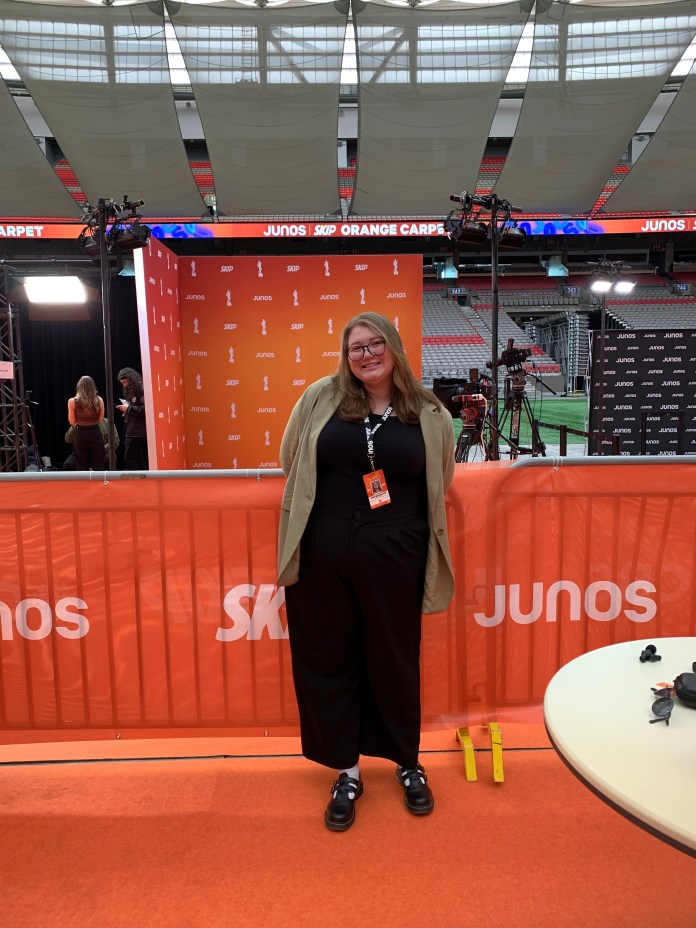
Anna McCausland
Production Manager
What are some of your responsibilities in your role at the paper?
I’m newly responsible for putting together the paper, designing the features (like this one) and making sure we are ready for print the night before!
What do you find most challenging about working here?
Geez. That’s a loaded question. When I was a writer or editor I would’ve said getting people to interview. But now that I’m on the design side of things, I’d say making sure I’m visually capturing the message the author’s writing is portraying as accurately as possible.
What inspired you to want to work at The Cascade?
The real answer: I wanted to get paid for my writing. I’ve always loved writing and wanted something where I could fully focus on it and have a good excuse to carve out time in my life to devote just to writing. But the more I worked at The Cascade, the more I realized I love the people I work with and I love working towards a common goal. Not only do I love the community I work within, I love that we get to spotlight and give voice to other communities.
Some universities have an online presence only, what are the benefits to having a print version as well?
You can actually hold your own writing in your hands. But also printed/physical media is so much harder to censor. Once it’s out there, it’s out there. You can’t make any more changes. There’s a finality about print media that I think online-only loses.
Why do you think students should consider writing for or joining The Cascade?
If you love writing, illustrating, or just want to explore the community here at UFV or in Abbotsford, you should join The Cascade. You never know where an article will take you. I’ve gone to The JUNO Awards, interviewed some of my favourite writers, and gotten to know some really amazing people because of working here.
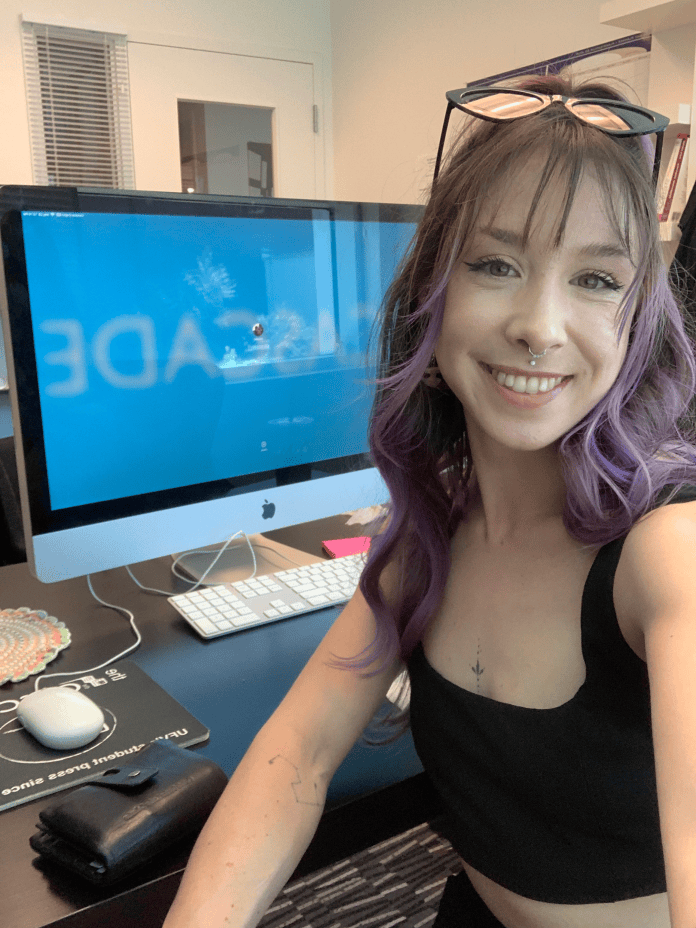
Darien Johnsen
Editor-in-Chief
What are your responsibilities at The Cascade?
My main role is ensuring that what we are covering is relevant, timely, and of interest to students. I also make sure that our work is factually correct and responsible (no libel!), and up to journalistic standards. This means working with sectional editors and contractors to make sure they can do the best work they can possibly do. I also edit the entire paper and then make sure that the print copies are designed in the best way possible with our production team.
On top of my editorial responsibilities, I also make sure that The Cascade has a healthy internal environment. This looks like building up our team and keeping it a healthy and safe place to work, alongside our managing editor. I also work to keep up community relations and partnerships both within and outside of the university, and I assist our managing editor with human resource issues, hiring and staffing, and organizing our production cycle. Finally, I work closely with the business manager to keep our budget in check each year and decide how our money is used, and with our creative director to ensure our physical paper, website, and social media look great and are easy to navigate.
What do you find most challenging about working here?
The sheer workload that I just described in the previous question is one of the biggest challenges. The paper eats up so much of my time and energy. This is a near full time job and I work pretty much every day to some capacity. It’s hard to manage this on top of classes and a second job. It leaves very little time for myself during the semester, which I really struggle with.
The other challenge is being a leader in general and making sure that we have a safe and healthy work environment. We have a big team and that inevitably means that personal and social issues will arise that myself and the executive team need to navigate with very few resources (you can hear more about this in our podcast The Cascade Corner Booth on Spotify!).
How has The Cascade revamped themselves to be current and relevant in this age of blogging, AI, and technological advancement?
I think it will always be a challenge for us to navigate AI. Many journalists in the wider world are struggling with this as well. It seems to be up for debate whether or not journalists should use AI and what role it might play for them in a positive way. But it is seen by some as a real threat to journalism and the economic health of journalistic organizations. The question that remains for me is how can we use it responsibly as a tool, and is it okay to do that? We currently have a no AI policy that our contractors must sign and strictly abide by. Regardless of using it as a tool, the battle against AI writing in general is the bane of my existence. I do not want AI articles in our paper!
Too many students use [AI] to write and it’s a real shame because one of the perks of working here is learning how to write well. We have a team of editors who put so much effort into helping writers grow in their craft. To have someone disrespect that by handing in an AI written article feels like a slap in the face to the people who put hard work into crafting good journalism. It’s a disservice to the paper and to the self to deny that work that will actually help you understand how to write and research yourself.
What is most rewarding about your work?
I would say the community we’ve built. I love having so many friends at the university and a really cool space to hang out in. We are truly a family and I love the people I work with. I also love to watch our paper and contractors grow and know that I had a role in these positive changes.
What direction do you see journalism taking in the future?
Journalism is a precarious field, and it gets a bad wrap for reasons both valid and invalid. Some journalists have abused their powers both on the left and the right, that’s true. But the work itself is still important regardless of those people. There are good journalists out there who love their work and want the truth to come out in a way that makes sense to consumers. They truly want to make the world a better place.
Economically, both independent and legacy media organizations have been struggling for decades. People don’t value journalism like they used to. Regardless, someone has got to go out snooping and asking hard questions!
Fabiola Cruz Alderete
Columnist
What is your role at The Cascade?
I am a writer for The Environmentalist, The Cascade’s very own column for understanding the natural world.
Why did you want to work at The Cascade?
I felt inspired to join the team after reading past editions of the newspaper and meeting some of the staff members back then. I loved the work that was being done and wanted to be a part of it by sharing the topics that I am passionate for, but oops! I’m an environmental science student and writing in English is not my strong suit. In spite of that, I decided to take the risk and apply. I was thrilled when I got the position and now, I’ve been writing here for a little over two years.
Fabiola, what has been the most rewarding aspect of your work?
I’ve been approached a couple of times by students who enjoy my column, it is surprisingly rewarding and I’ve always asked them if they had any topic they would like to see covered by the column, I’ve gotten only excellent recommendations. Moreover, writing the column has helped me so much to stay on top of class subjects, to the point of even going to lectures on topics that I have already written about.
What do you find most challenging about your role?
Making complex environmental issues or topics understandable for the wide range of readers that populate the university’s community, without oversimplifying within my allotted 500 words, is where the hardest part of my position lies. But don’t get me wrong, it is still [a] struggle for me and that’s why I have to ask for forgiveness from my editor every time I turn a column in because I’m over the word limit, again. Nevertheless, this experience has been worth it.
Why do you think students should consider writing for The Cascade?
Even if you are doubting your capabilities, trust that you will always have something worthy to contribute, plus it is a great experience to have on your CV, even when you don’t want to have a career in writing or journalism. In my experience, even though it all began as a passion project, having this position has opened doors and has been of great relevance when I have been considered for opportunities that have helped me forward my science career.
Cassie Williams
Managing Editor
Cassie, what does the managing editor do?
Some of my responsibilities include organizing all the behind the scenes of the paper (meetings, scheduling, overseeing daily operations, etc.). I also act as our in-house HR, collaborate with our editor-in-chief for hiring/training, and edit each article before publication.
What is most rewarding about your work?
When someone comes up to me from the community and compliments an article we’ve written or a topic we’ve drawn attention to. It just feels like we’re making a real difference when people go out of their way to tell you they actually read our paper and got something out of it. Then there’s the gushy part of me that says the connections I’ve made with all the wonderful people I get to work with. I wouldn’t trade any of the late night productions or chaotic meetings for anything.
What future direction do you anticipate journalism taking?
I’m very of the opinion that AI is a phase that will wither out over time and hopefully crumble, but unfortunately it is here for now and we’re seeing lots of fallout because of it. Having said that, we live in a time where real, credible news is more important than ever. In the rise of AI, mis/disinformation, and general online slop, human-centred news and reporting is reclaiming its place and people are starting to give the appropriate value to it. On that note, as long as we continue to have people committed to the work who are even half as passionate about the industry as the people I work with at The Cascade, real journalism will be kept alive.
What is a strength about The Cascade that makes the paper unique in journalism?
I’ve worked at The Cascade for over three years now and I can say especially now that each and every one of us put our blood, sweat, and many tears into this publication. Aside from the passion that goes into our paper, I would say we’re plugged into the community and have a big focus on staying UFV-and-Fraser-Valley-focused and really trying to bring original news and reporting to our readers.
How has The Cascade reinvented themselves to be current and relevant in an age of blogging, AI and technological advancement?
One of our biggest steps to bridging the digital gap has been launching a podcast! We try to stay on top of our socials and we upload all articles online, but our multimedia presence has really blossomed this year which is something our EIC and I had a big focus on when taking over. We have bi-weekly news round-ups, we’ve done on-air interviews, and now our newest baby which is The Cascade Corner Booth (Listen to our first episode on Spotify now if you dare)!
What advice would you give to those interested in pursuing a career in journalism?
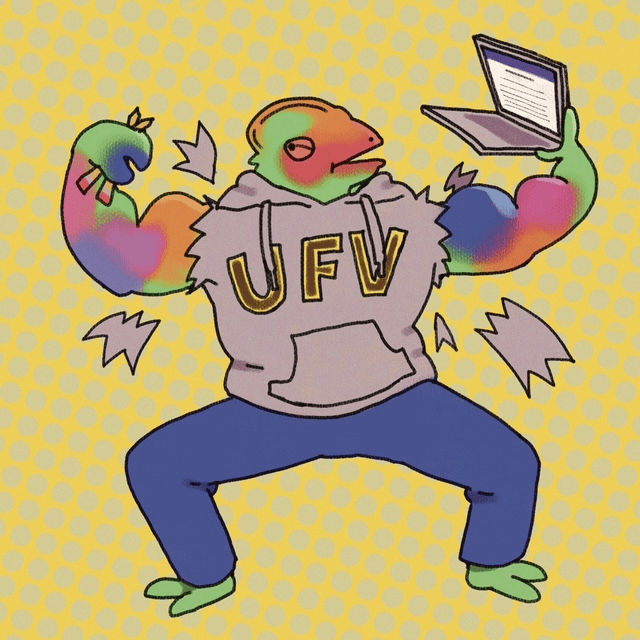
Be so f**king tough and adaptable as a chameleon.
At the end of the day, writing for the paper is both hard work and rewarding. It’s an opportunity to learn journalistic practices that are invaluable for students. Having worked here as a staff writer, jr. news, and the news editor, I have seen many wonderful people breathe new life into a paper that has been around for decades. A truly wonderful place to work and be creative with a team that supports each other, The Cascade remains one of the best job opportunities I’ve ever had. If writing is a passion of yours, just remember, journalism is still very much alive, and having the opportunity to have your voice heard is a powerful tool and responsibility.

Rachel is working towards a BA with a concentration in English and Theatre. She has been employed at The Cascade since Fall 2021 as a Staff Writer and a Jr. News Editor. Currently, she is the sectional News Editor and enjoys meeting and interviewing people as well as taking long walks in nature. Rachel also likes to stay up to date on the latest trends and informs students through her fashion column entitled Campus Fashion.